
Signs a Host or Landlord Might Be Watching You
By: Admin
2026-07-09
Most landlords and hosts never touch a hidden camera. But the power imbalance in a rental where someone else holds the keys, knows the layout, and can enter when you're not there is exactly why this fear feels different from a stranger's Airbnb. If something feels off, trust that instinct enough to check, calmly and methodically.
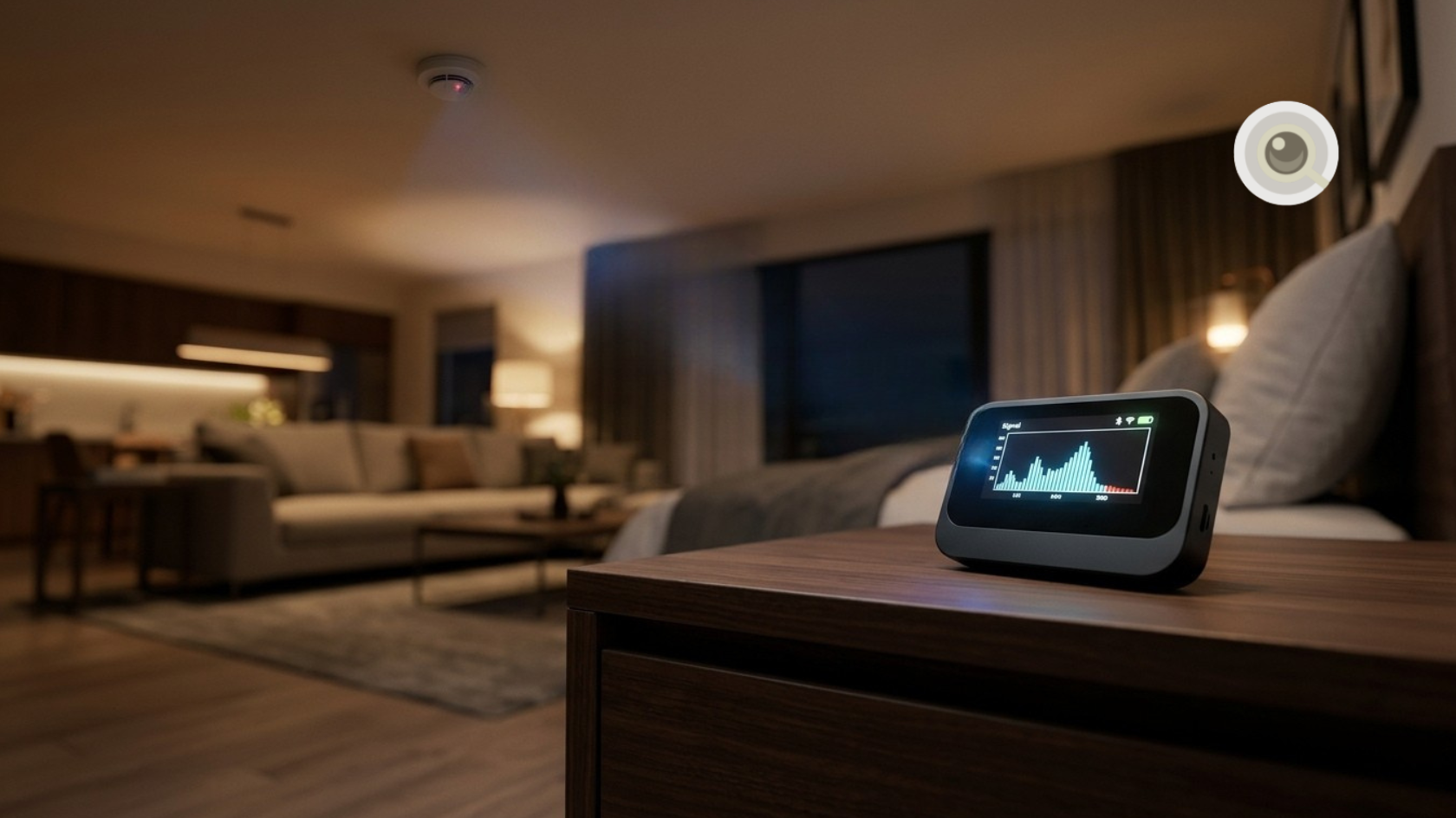
A hidden camera from a landlord or host is more likely to be found in devices they installed or provided smoke detectors, routers, alarm clocks, or "welcome" gifts like humidifiers or picture frames rather than items you brought yourself. That's the first filter: anything already in the unit when you moved in deserves a closer look before anything you own.
Warning signs worth taking seriously
- An object that wasn't there during your viewing but appeared before move-in — a new smoke detector, an extra router, a clock radio "left behind."
- Devices angled toward beds, bathrooms, or changing areas rather than doorways or hallways, which is where a legitimate security camera would typically point.
- A landlord who has unusual access patterns — entering without notice, or knowing details about your routine they shouldn't.
- Objects with small holes, unexplained lights, or ports that don't match their stated function (a "smoke detector" with a USB port on the side, for example).
- Wifi networks you don't recognize broadcasting from the unit itself, which can indicate a camera using its own connection rather than yours.
None of these signs alone confirms a camera. Together, especially if more than one applies, they're worth acting on.
Where to check first
Focus your search on anything with a direct line of sight to a bed, shower, or toilet that's both the highest-risk placement and the easiest to check systematically. Work through electrical outlets, smoke detectors, router lights, wall clocks, and any decorative object that seems slightly out of place for the room. A hidden camera detector app that combines lens-glare scanning with network analysis will cover blind spots a visual sweep alone can miss, particularly for pinhole lenses.
What to do if you find one
Document it before touching it photos, video, timestamps. Leave the device in place if you can, and contact local law enforcement rather than confronting the landlord directly. Hidden recording in private spaces like bedrooms and bathrooms is illegal in the vast majority of jurisdictions, regardless of who owns the property. Ending the lease early is often legally justified in these cases, but a police report and, where possible, legal advice will protect you better than handling it alone.
Most rentals are exactly what they appear to be. Checking isn't about assuming the worst of every landlord, it's a five-minute habit that removes the uncertainty entirely.
FAQs
Can a landlord legally put a camera inside my rented unit?
No, cameras are not permitted in private spaces like bedrooms and bathrooms, even if the landlord owns the property. Common areas like shared hallways may be treated differently depending on local law.
What's the first place I should check if I suspect a hidden camera?
Anything with a direct line of sight to your bed or bathroom smoke detectors, clocks, and routers are the most commonly repurposed objects.
Will a hidden camera always connect to the wifi I'm using?
No. Many hidden cameras broadcast their own network or store footage locally, which is why scanning for unfamiliar wifi networks is only one part of a full check, not the whole method.
Should I confront my landlord if I find a camera?
No document everything first and report it to local authorities. A direct confrontation can lead to evidence being removed before it's verified.
Copyright © 2024 Cybergram Pte Ltd (UEN: 202300863E) t/a DETEKCAM
